Electrochemistry is more than a lab tool, it’s a scalable way to treat waste streams, regenerate chemistry, recover metals, and refine products with precision. By controlling ions and redox reactions directly with electricity, electrochemical systems can reduce reagent use, simplify workflows, and unlock process options that conventional chemistry can’t match.
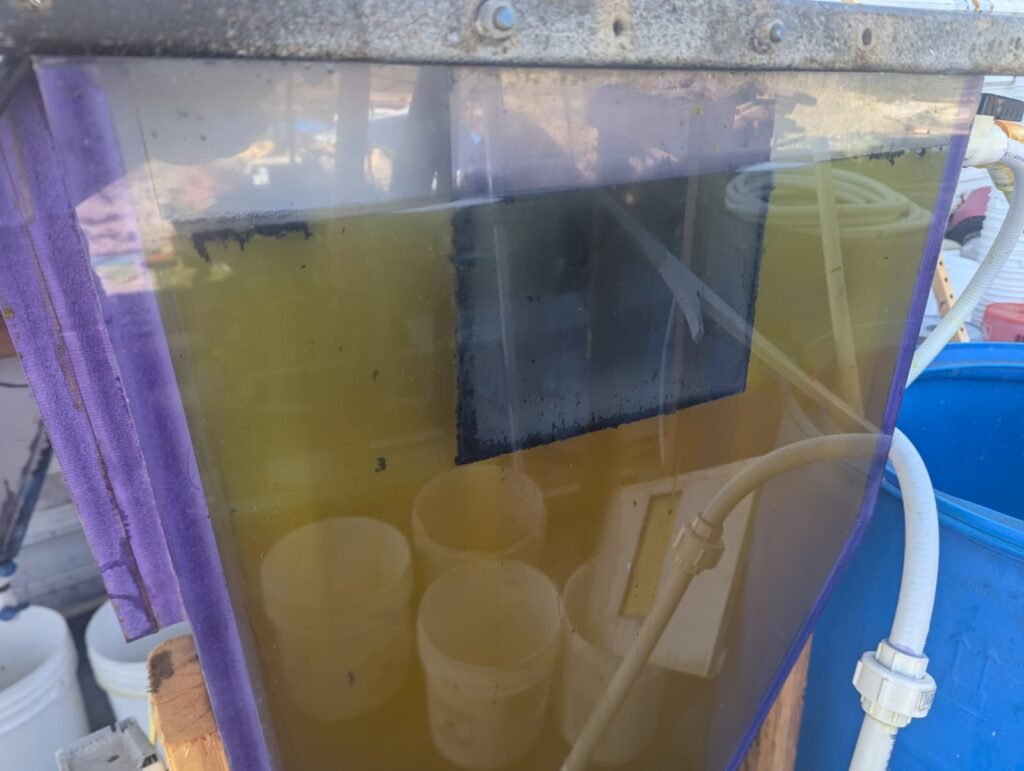
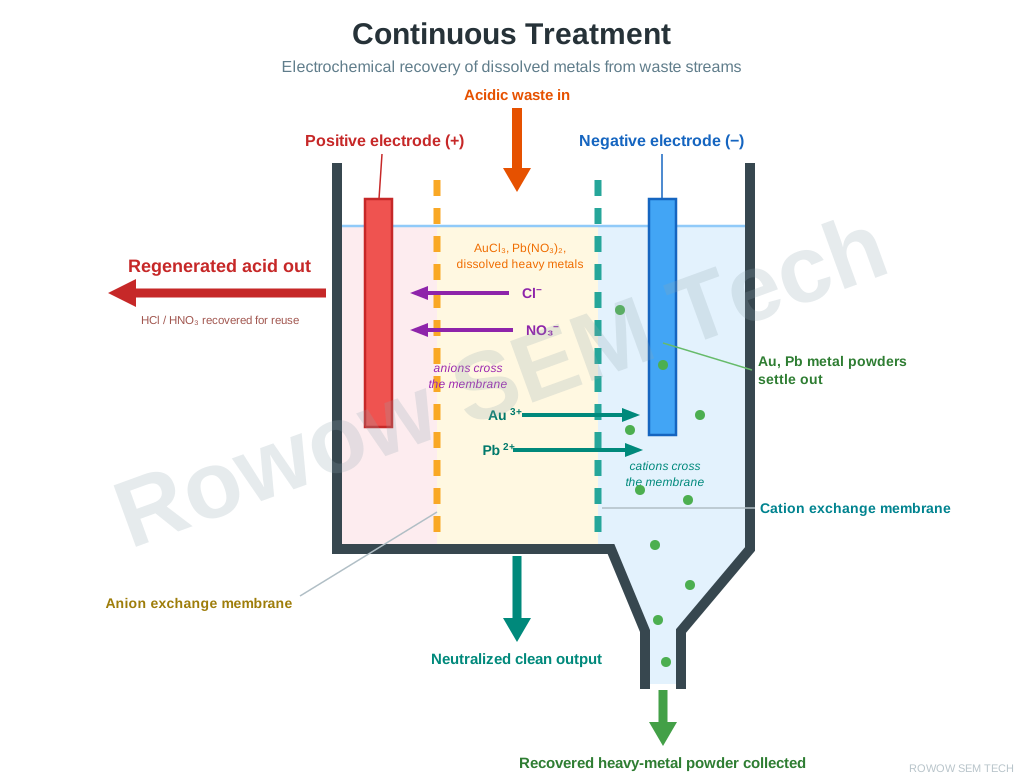
Metal-bearing or acidic waste streams can be processed continuously through an electrochemical cell where dissolved metals are recovered at the cathode (negative side). Recovery behavior can be tuned by solution chemistry and operating conditions, enabling the removal and concentration of heavy metals and other dissolved species while supporting cleaner, easier-to-handle effluent pathways. In testing, clear mining waste had its heavy metals reduced within 5 to 10 minutes at about $5 per ton, while the acid was recovered and regenerated in the same pass.
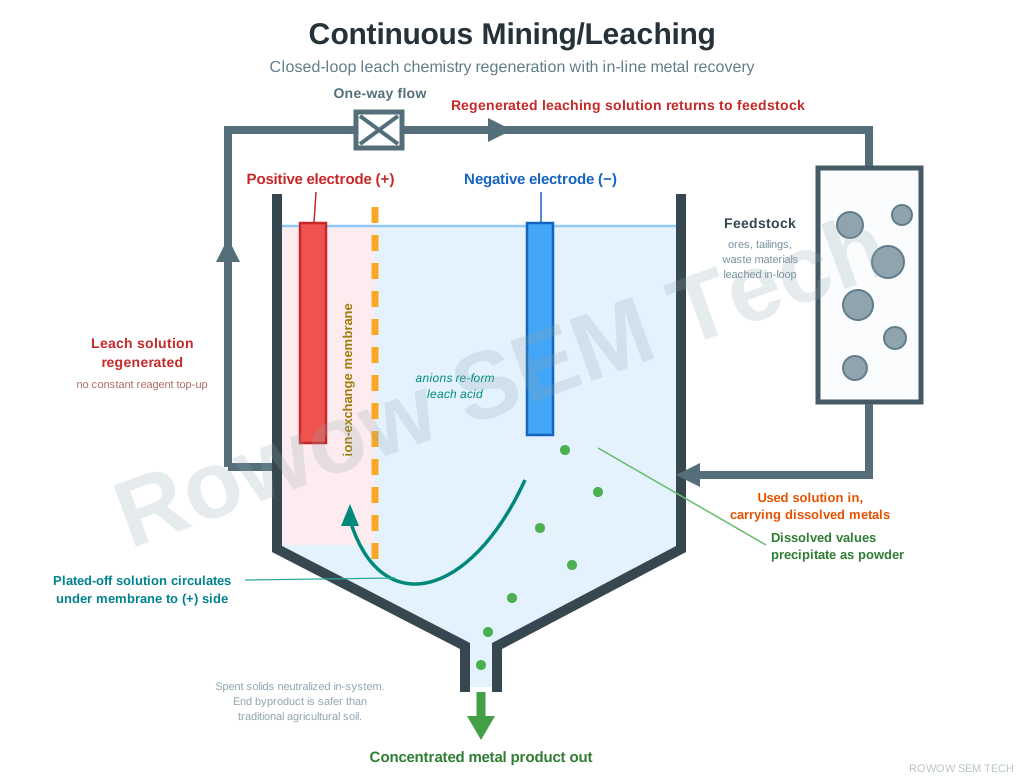
Continuous Mining/Leaching
A continuous electrochemical leaching approach can regenerate key solution chemistry in-loop while recovering dissolved values into a concentrated product stream. This supports closed-loop processing of diverse feedstocks (such as ores, tailings, and select waste materials) turning low-value inputs into recoverable concentrates while reducing the need for constant reagent replacement. Final extracted solids are neutralized in the same system, and the end byproduct is safer than traditional agricultural soil. Bench results to date: up to 99% recovery at costs as low as $50 per ton, with 53 of the 60 US critical minerals extractable in a single leaching solution.
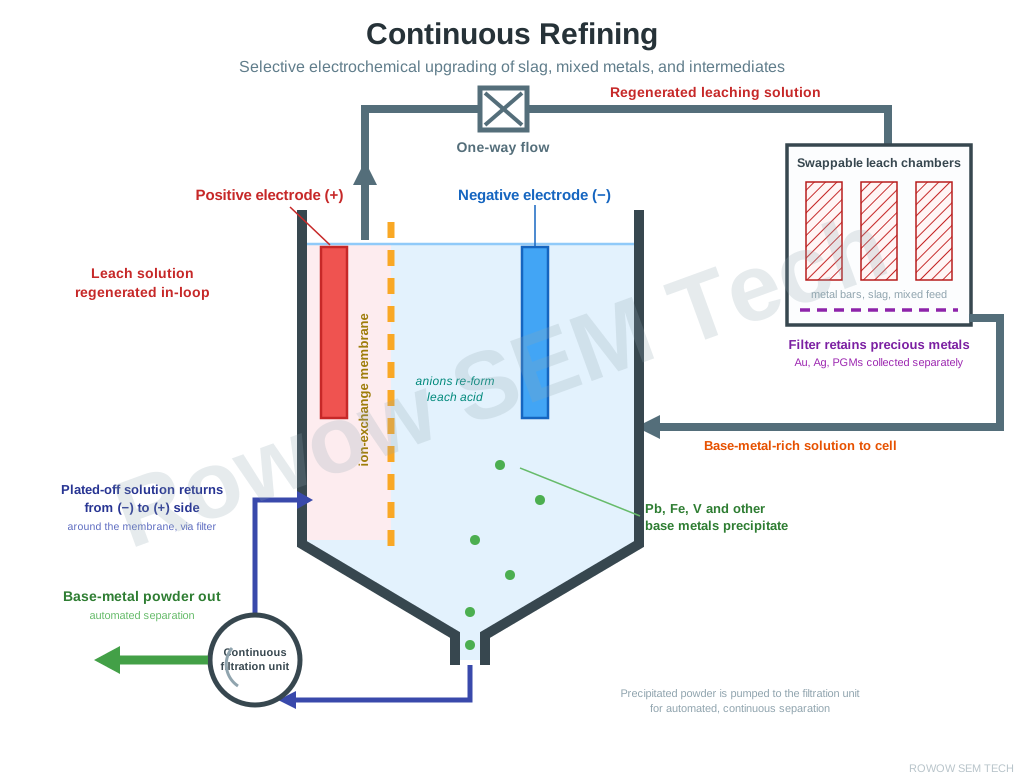
Continuous Refining
Electrochemical refining can upgrade metal-bearing materials (slag, mixed metals, bars, and other intermediates) by selectively moving and depositing target metals to an electrode while leaving non-target fractions behind for separate handling. Compared with many traditional refining routes, electrochemical refining can reduce process steps, lower consumable intensity, and support automation-ready continuous operation. Our refining unit leached a complex vanadium-chrome dore bar, similar to Hastelloy, that traditional nitric acid would not touch.
Future Opportunities
Electrochemistry has a wide range of proven applications, but many real world deployments have been limited by membrane cost and durability. Lower-cost, chemical-resistant membrane approaches can expand what’s practical, making electrochemical systems more accessible for both industrial and emerging use cases. Below are a few established directions that become far easier to implement when membrane constraints are reduced.
See It In Action
Watch how our electrochemical system works in a real-world demonstration.
Real Life Examples (we have no affiliation with the companies listed below)
As Rowow’s core stack manufacturing and mining-unit buildout mature, the same electrochemical architecture can be adapted to adjacent membrane-electrochemical systems with minimal redesign: often by reusing the existing cell hardware.
Fuel cells (electrochemical power generation) Membrane fuel cells convert hydrogen directly into electricity. Additionally ethanol, methanol, or ammonia can be fed directly into these fuel cells and only emit carbon dioxide+water (no other harmful gasses like NOX, carbon monoxide, particulates, etc) Example companies: Toyota; Hyundai Motor Company
Plug Power e-Methanol (power-to-liquids) Electrolysis produces hydrogen from water, which is then combined with captured CO₂ to synthesize methanol (an e-fuel and chemical feedstock). Example companies: European Energy; Liquid Wind; Carbon Recycling International
Redox flow batteries (long-duration energy storage) Flow batteries use liquid electrolytes separated by ion-selective membranes to provide scalable, long-cycle grid storage. Example companies: Sumitomo Electric Industries; ESS Inc.; Invinity Energy Systems
Hydroponic nutrient & pH control (recirculating systems) Electro membrane ion management can support tighter nutrient balance, pH stabilization, and water reuse in controlled-environment agriculture and hydroponics. Example companies: Netafim; Priva; Autogrow
Salinity-gradient power / “blue energy” (reverse electrodialysis / osmotic power) Membrane stacks can generate electricity from the ionic gradient between high-salinity and low-salinity water streams (e.g., brine + fresh water). Example companies: SaltPower; REDstack; Statkraft
Broader electrochemical manufacturing (chlor-alkali and other separations) Ion-exchange membranes are central to large-scale electrochemical processes (e.g., chlor-alkali) and can extend to other acid/base and salt separations. Example companies: thyssenkrupp nucera; Asahi Kasei; Chemours
🧪 DIY Ion Exchange Membrane Materials List
Want to build your own membrane? Below are the materials we use, with affiliate links to Amazon. Using these links helps support our open-source research at no extra cost to you.