
Conference presentation
Ion Exchange Membrane Electrolysis for Acid Regeneration and Selective Metal Recovery in Mineral Processing
Robert Karas, Rowow LLC. 39th Annual Regional Mining and Phosphate Conference (FLSME), Chemical Processing session, Thursday, October 15, 2026, Plant City, Florida.
Watch the talk
Swipe or use the arrow keys. Open the full PDF
About the talk
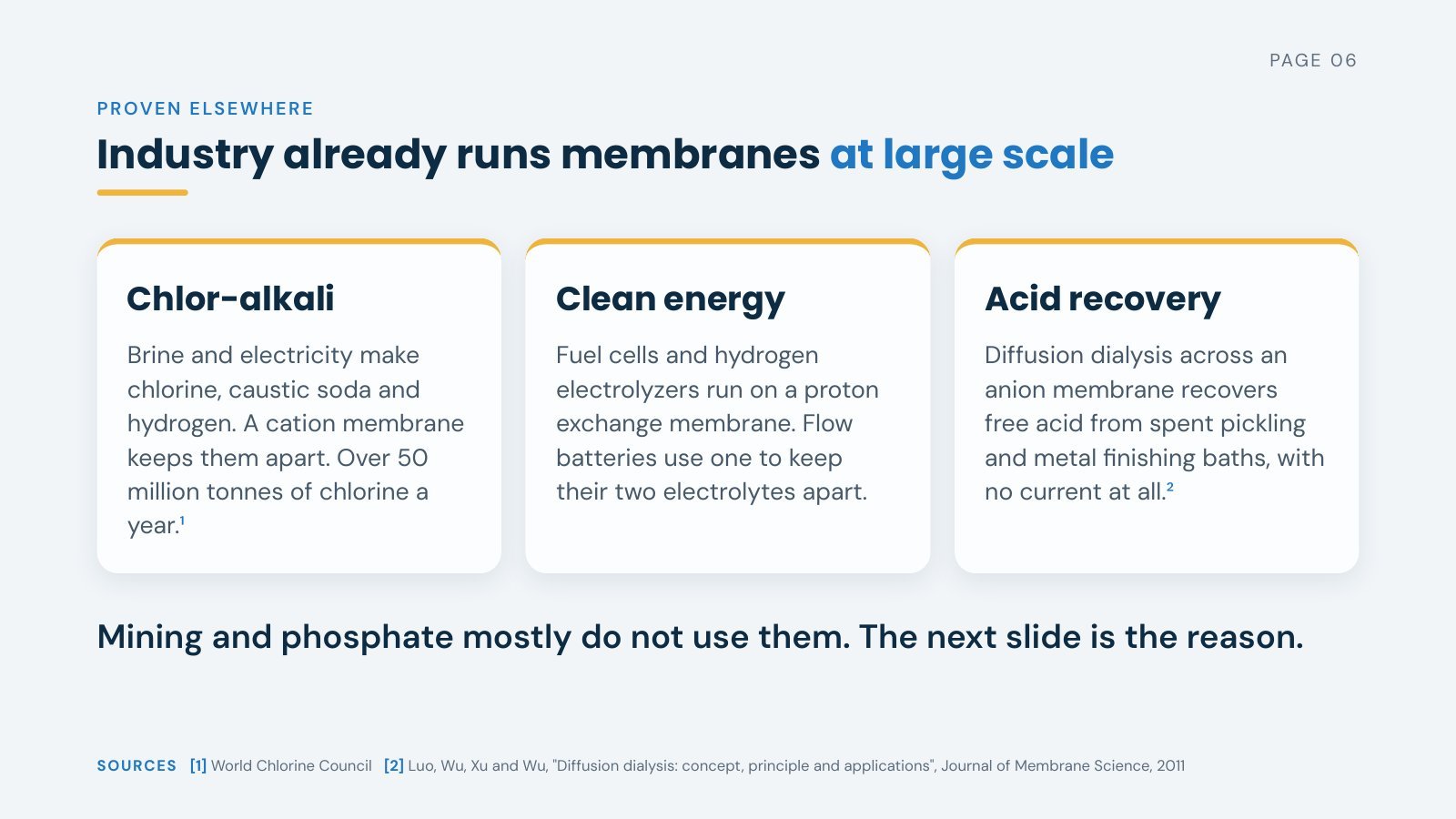
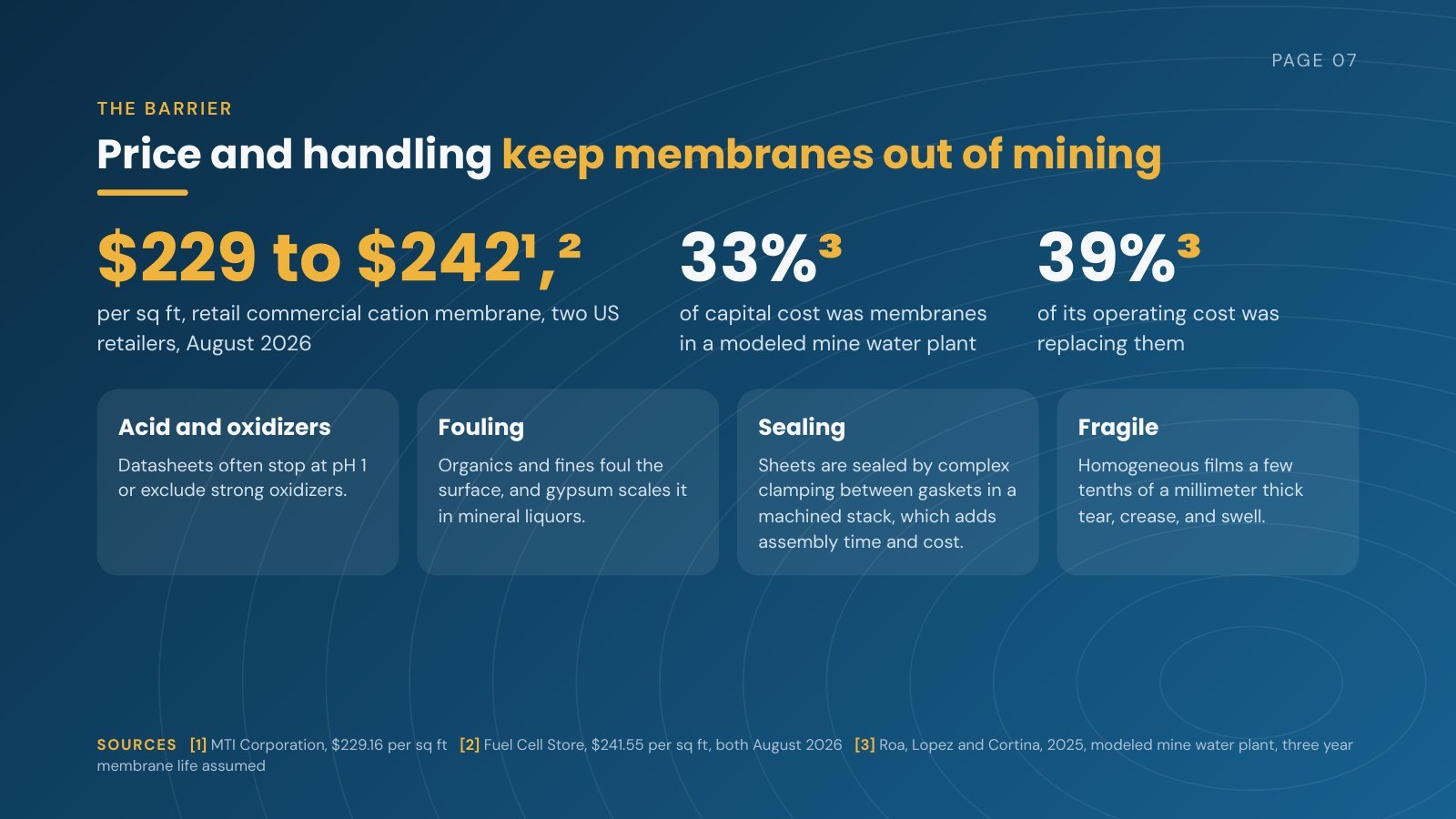
Ion exchange membranes let electricity move and sort the ions that reagents move today, and they already run at industrial scale in chlor-alkali, electrodialysis and acid recovery. Their price has kept them out of mining: commercial cation exchange membranes retail at about 230 dollars per square foot, and in one published model of a membrane plant on acidic mine water the membranes were a third of capital cost.
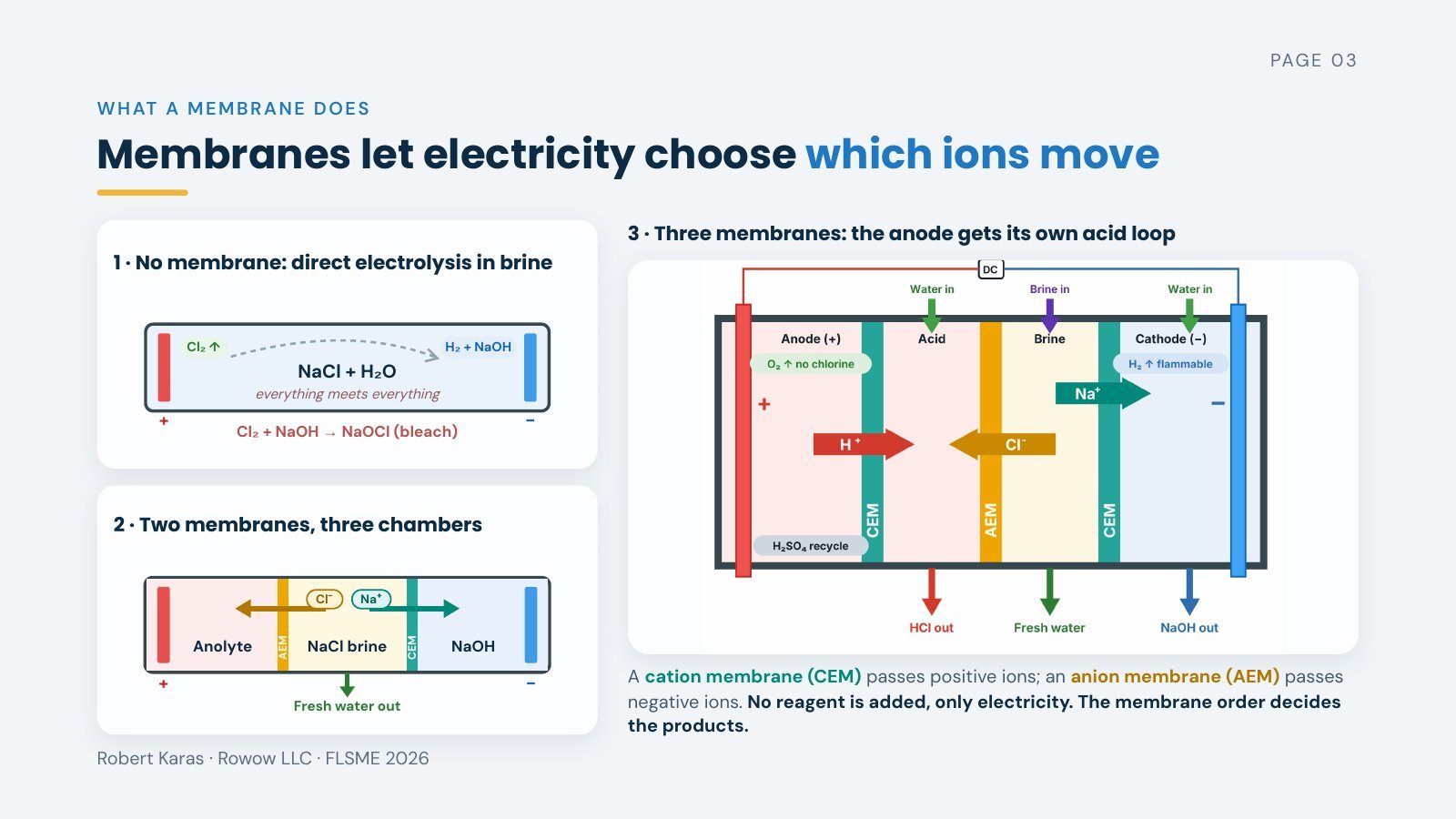
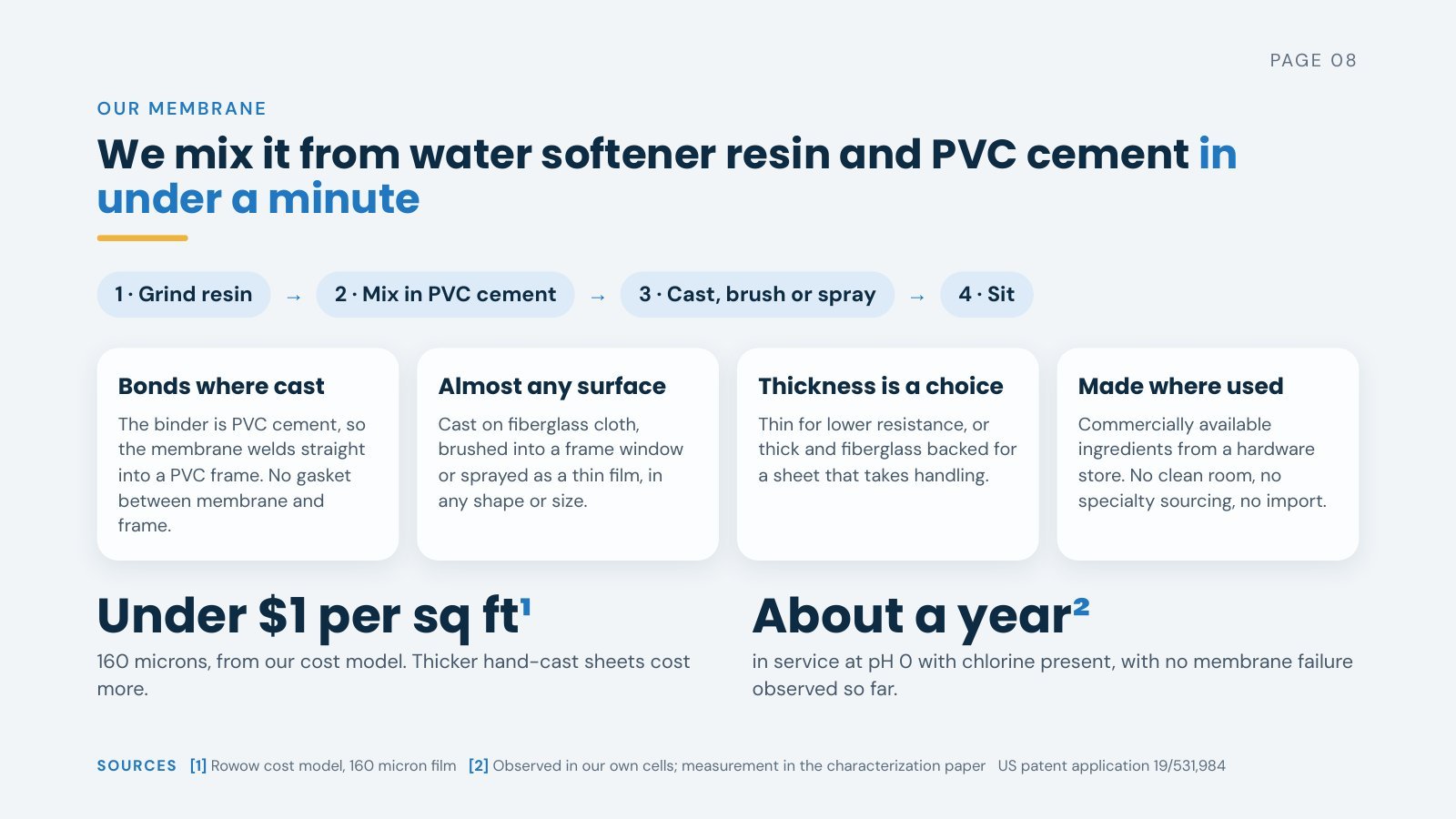
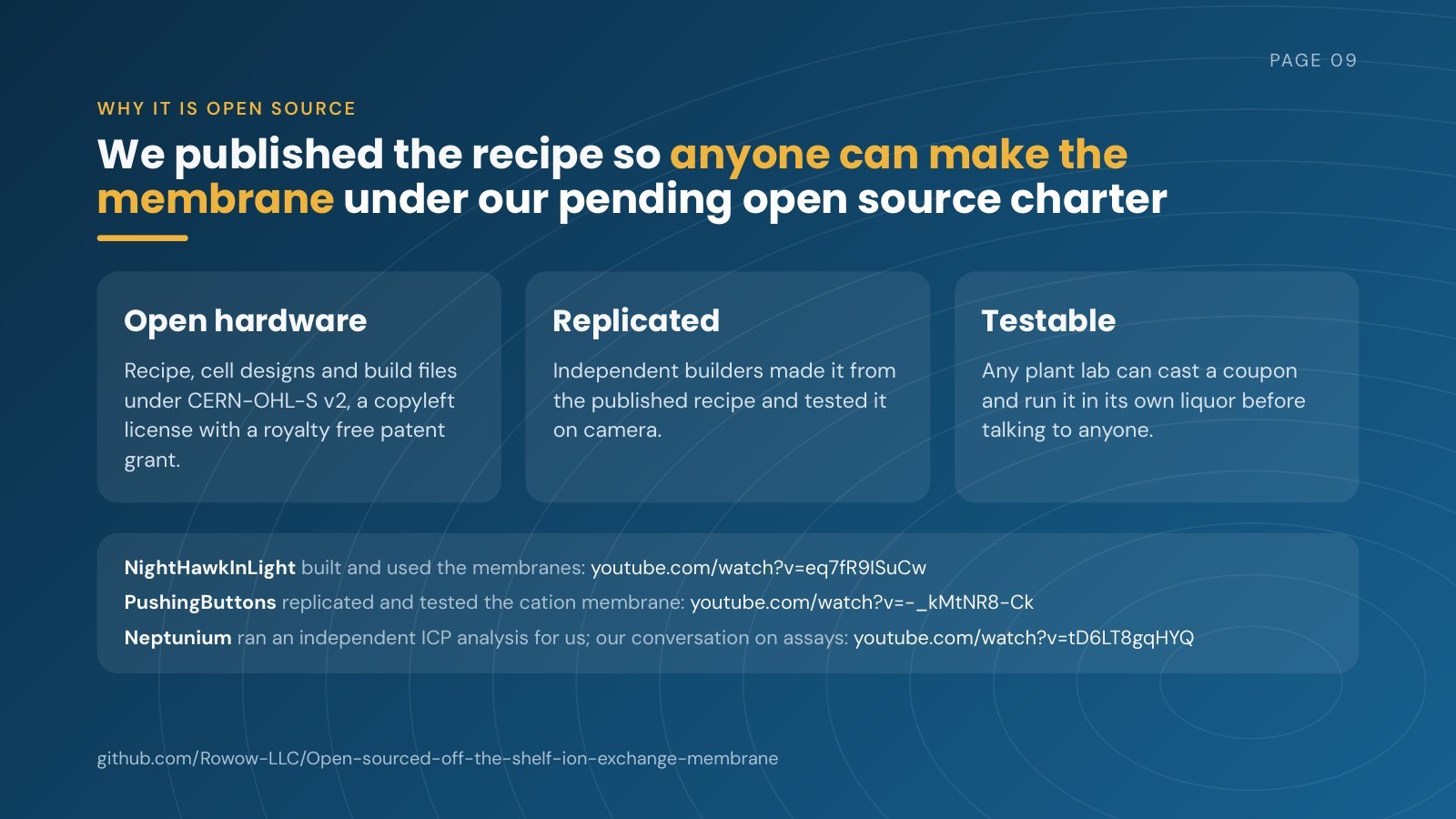
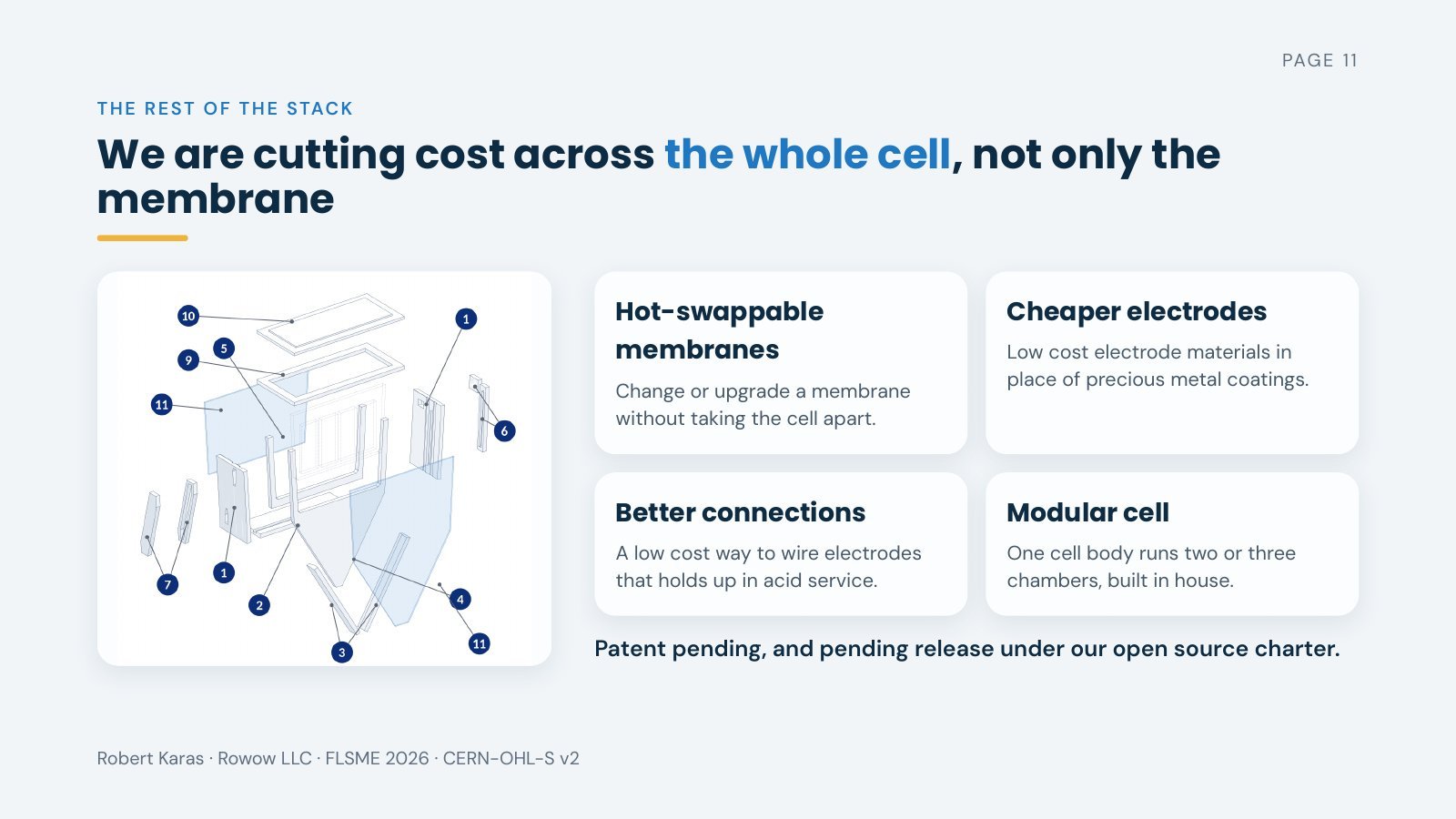
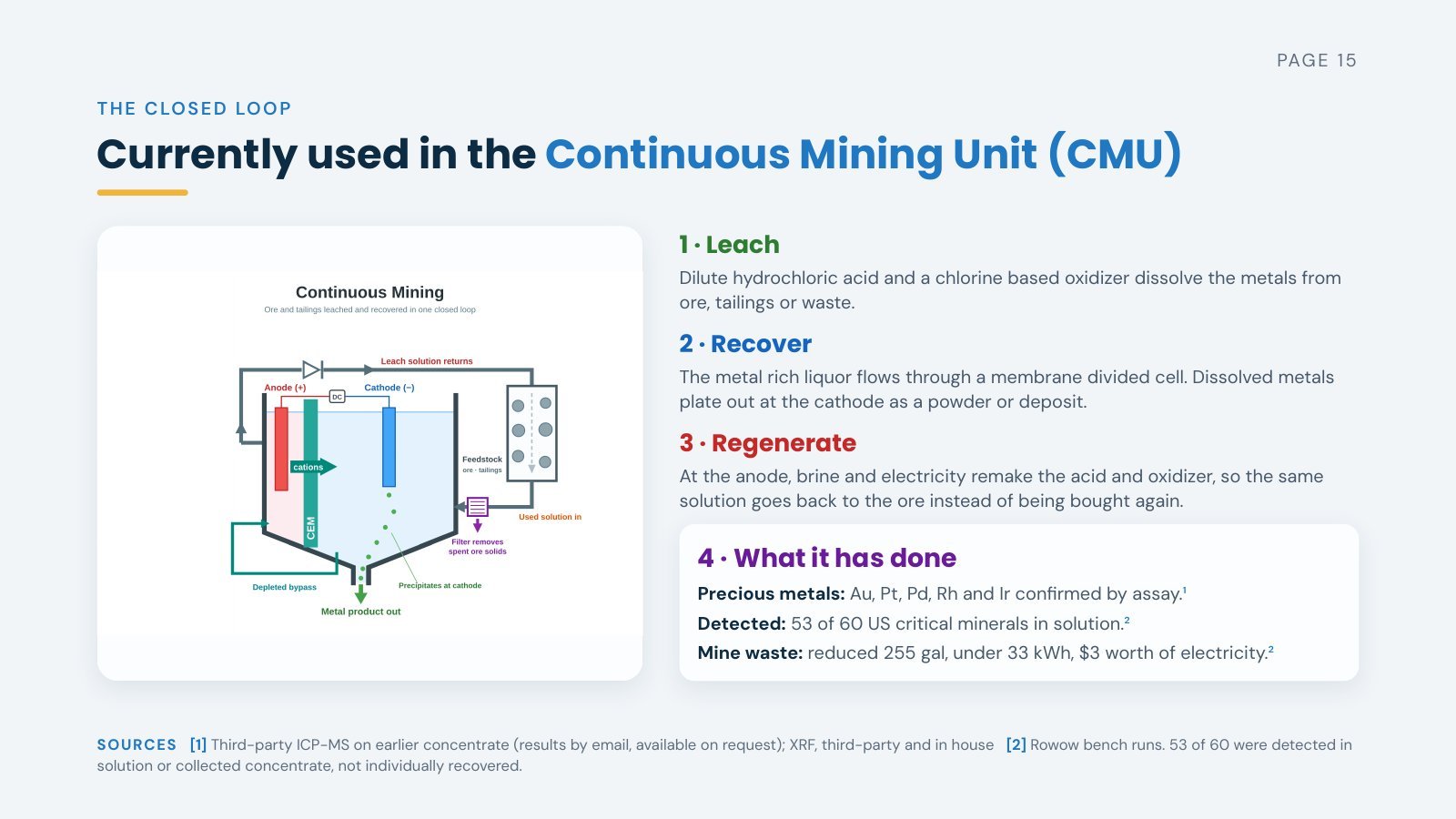
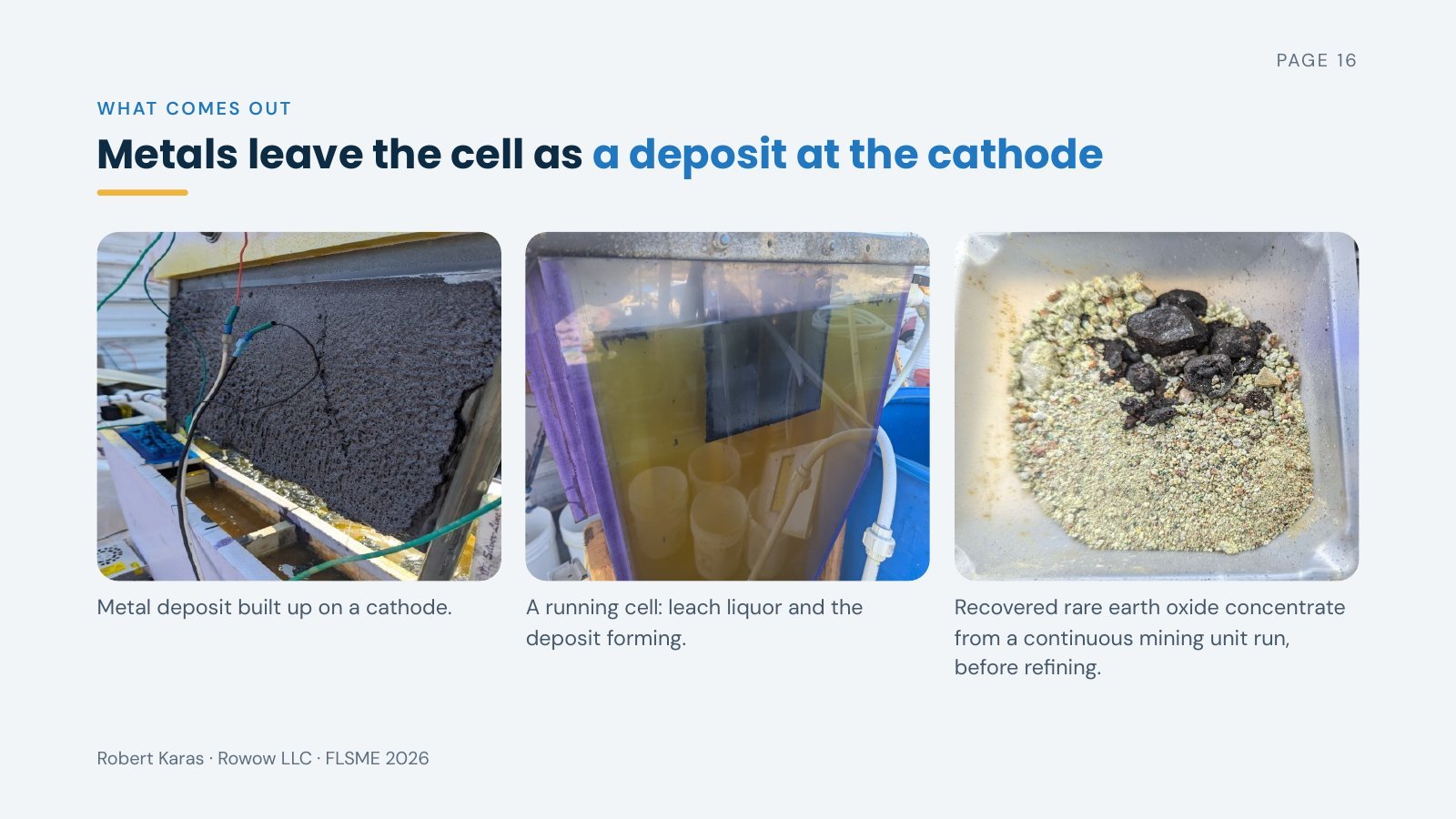
The talk describes S.E.M Technology, a closed-loop process built on membrane-divided electrolysis. Dilute hydrochloric acid and a chlorine-based oxidizer are regenerated from brine and electricity at the anode while dissolved metals plate out as powder at the cathode, so the leach solution is reused rather than bought again. The enabling component is an ion exchange membrane cast from water softener resin in a PVC cement binder, under one dollar per square foot at 160 microns in our cost model, with the recipe published as open hardware and replicated by independent builders.
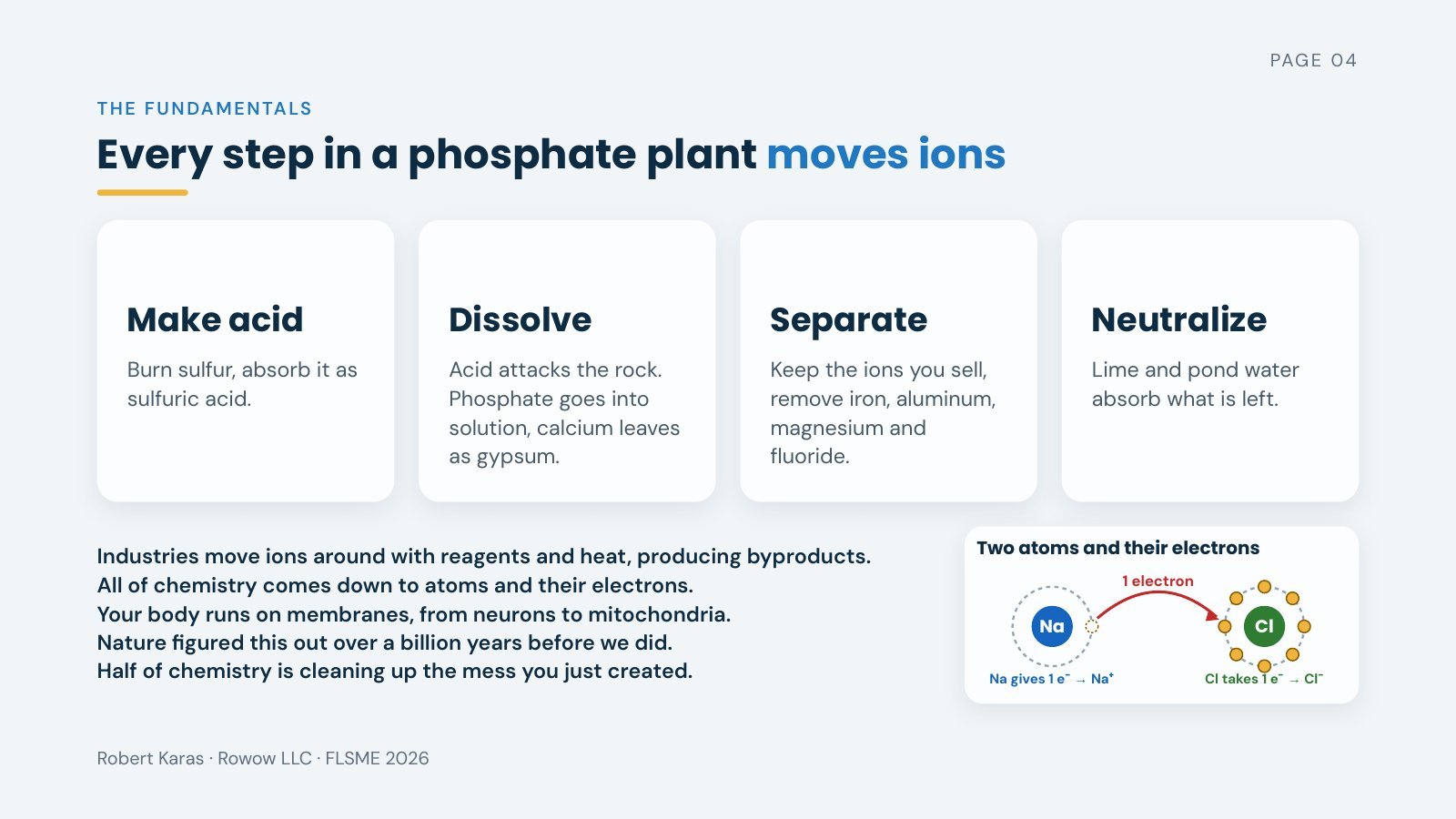
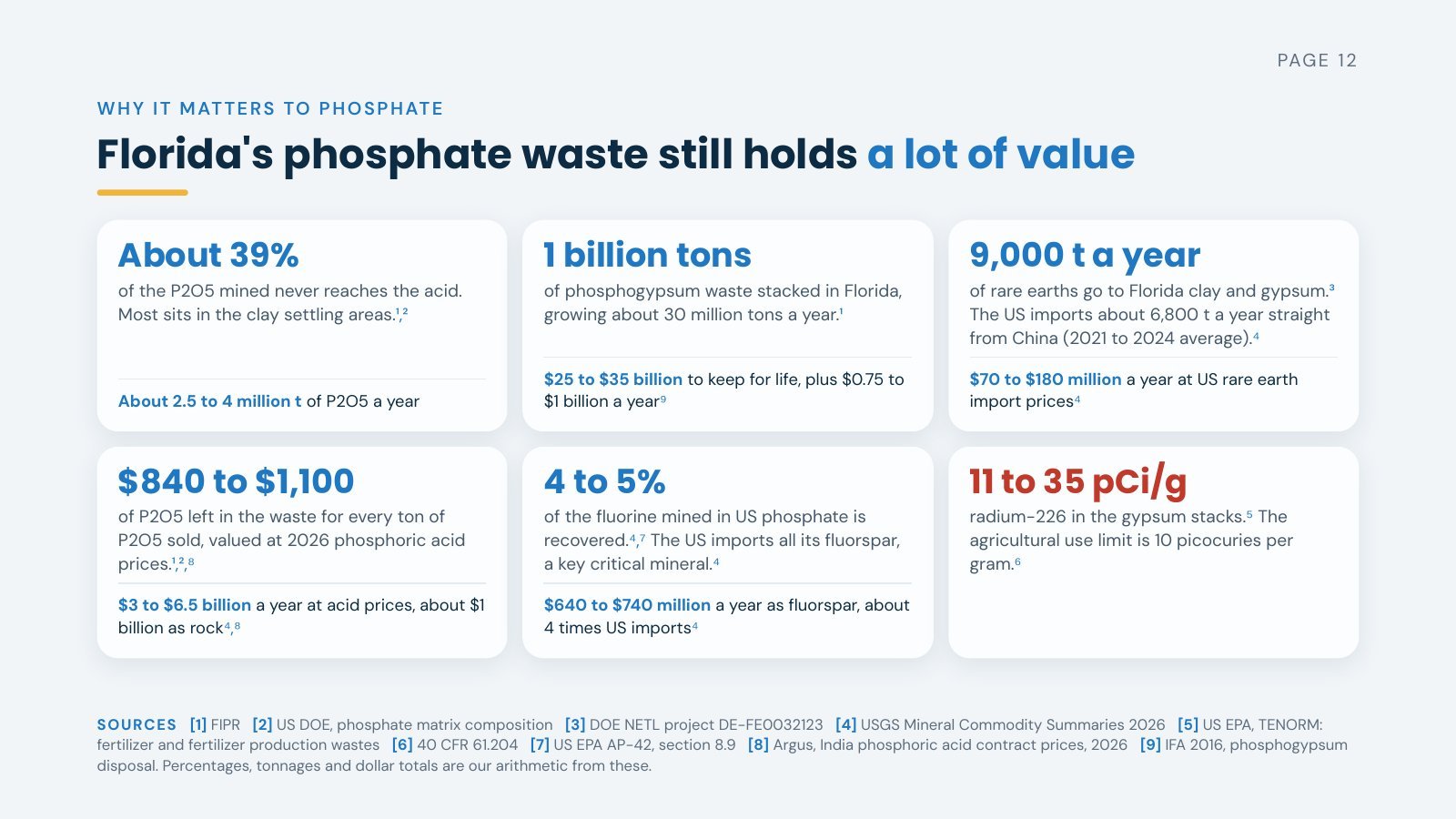
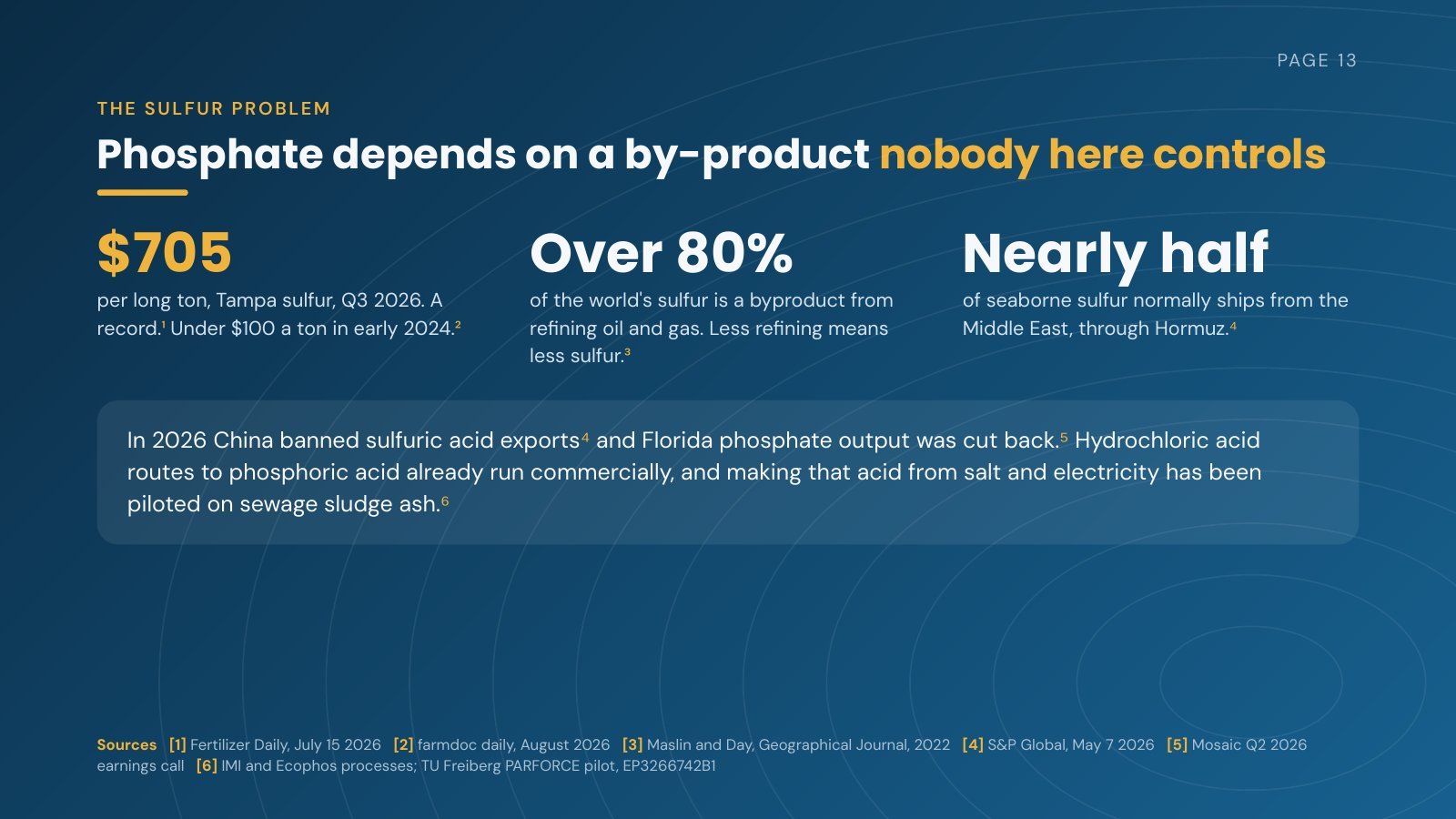
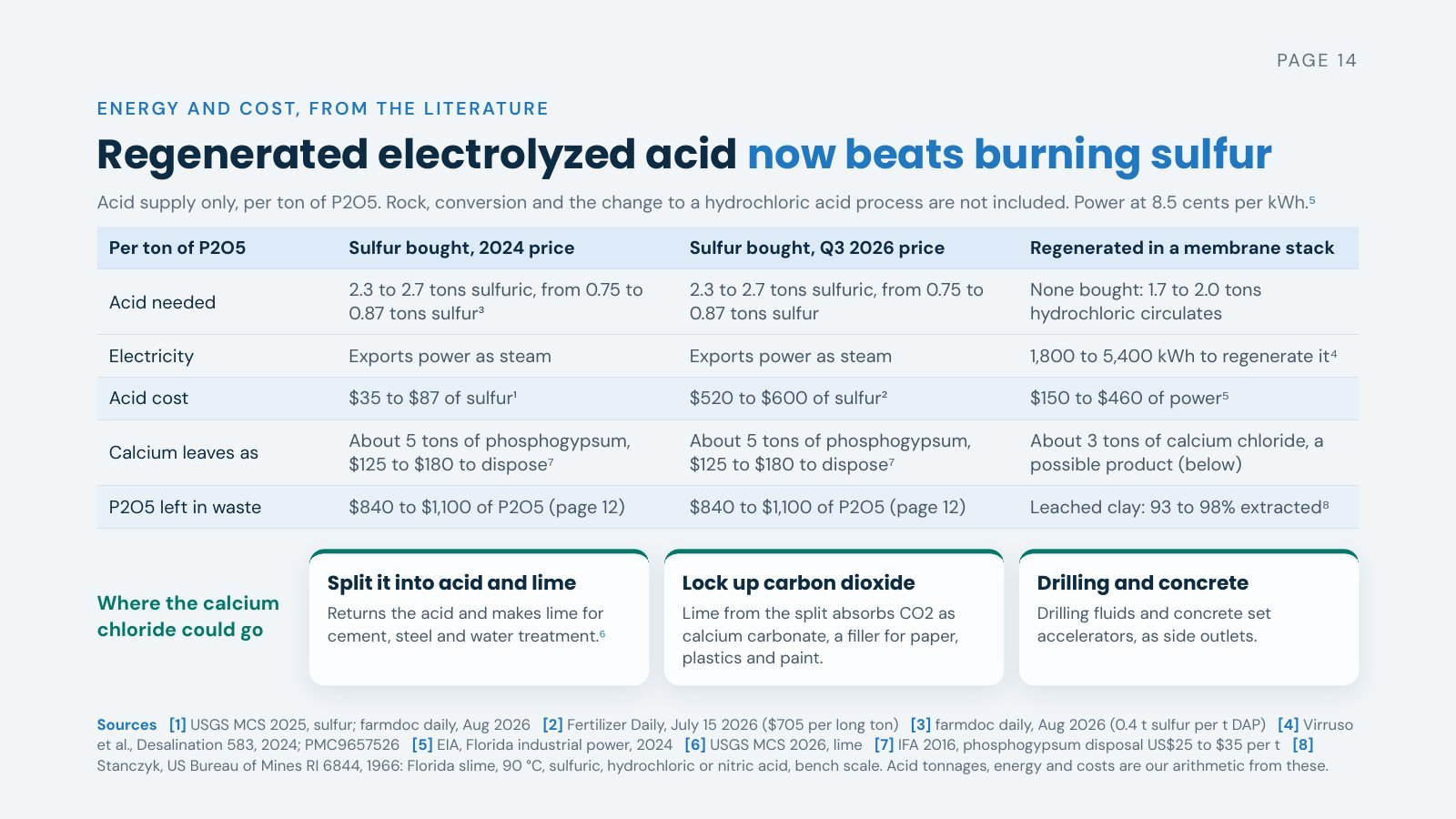
It then turns to Florida phosphate: the value left in clay and phosphogypsum, the 2026 sulfur price, and a literature-based comparison of regenerated acid against burned sulfur.
What the slides cover
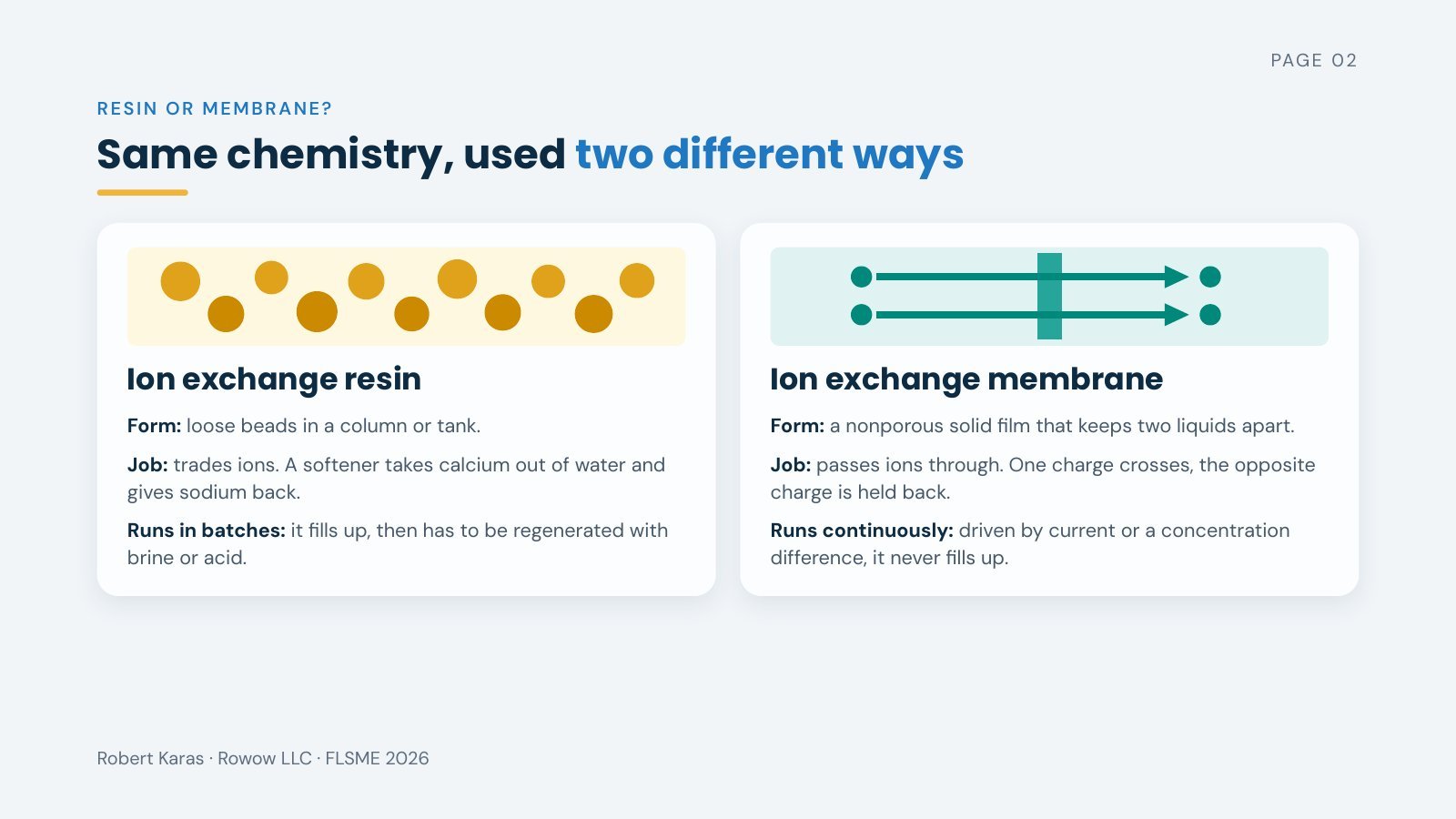
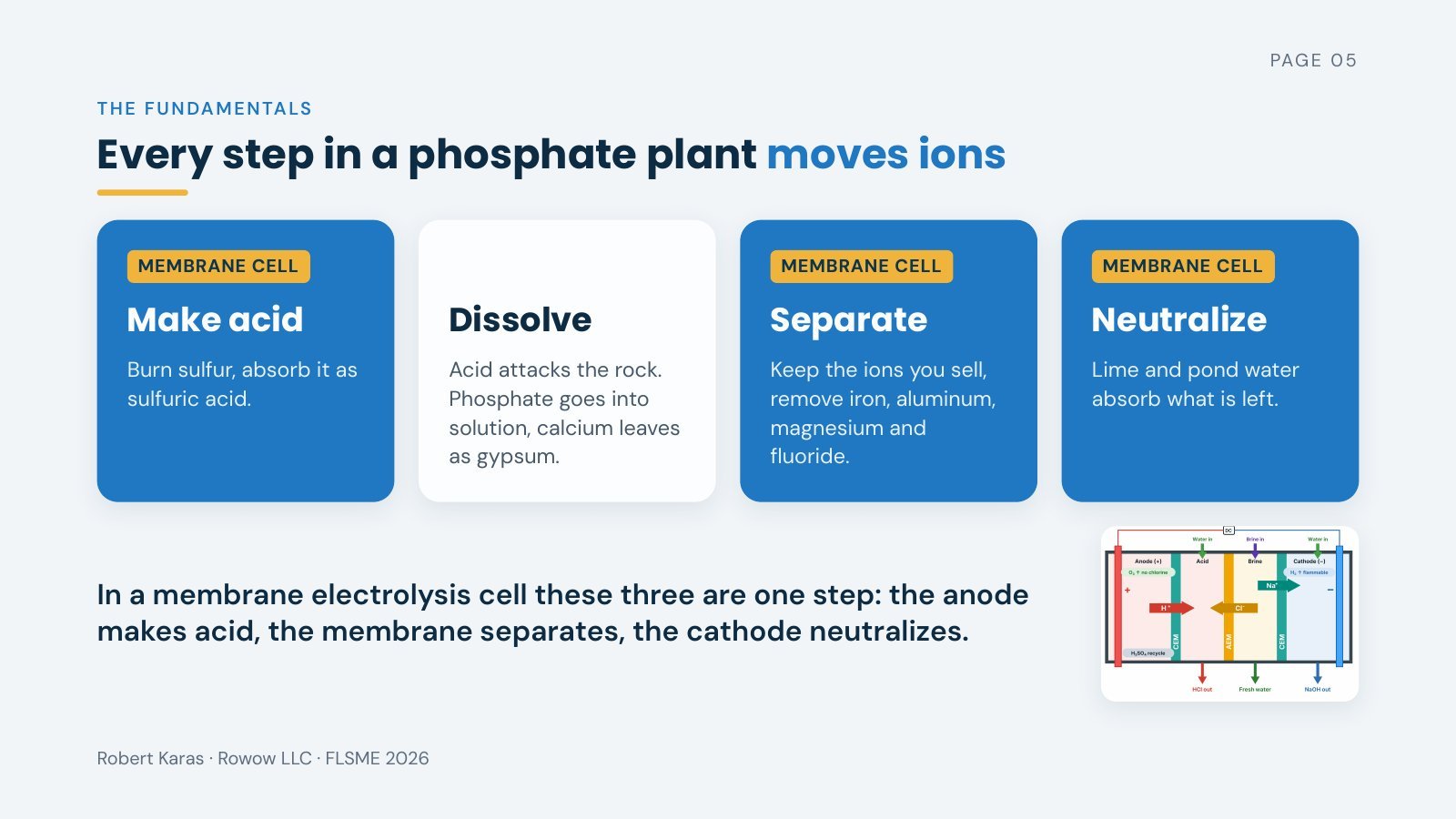
- Resin and membranes, and how a membrane cell makes acid, separates ions and neutralizes in one box
- Why price and handling keep membranes out of mining
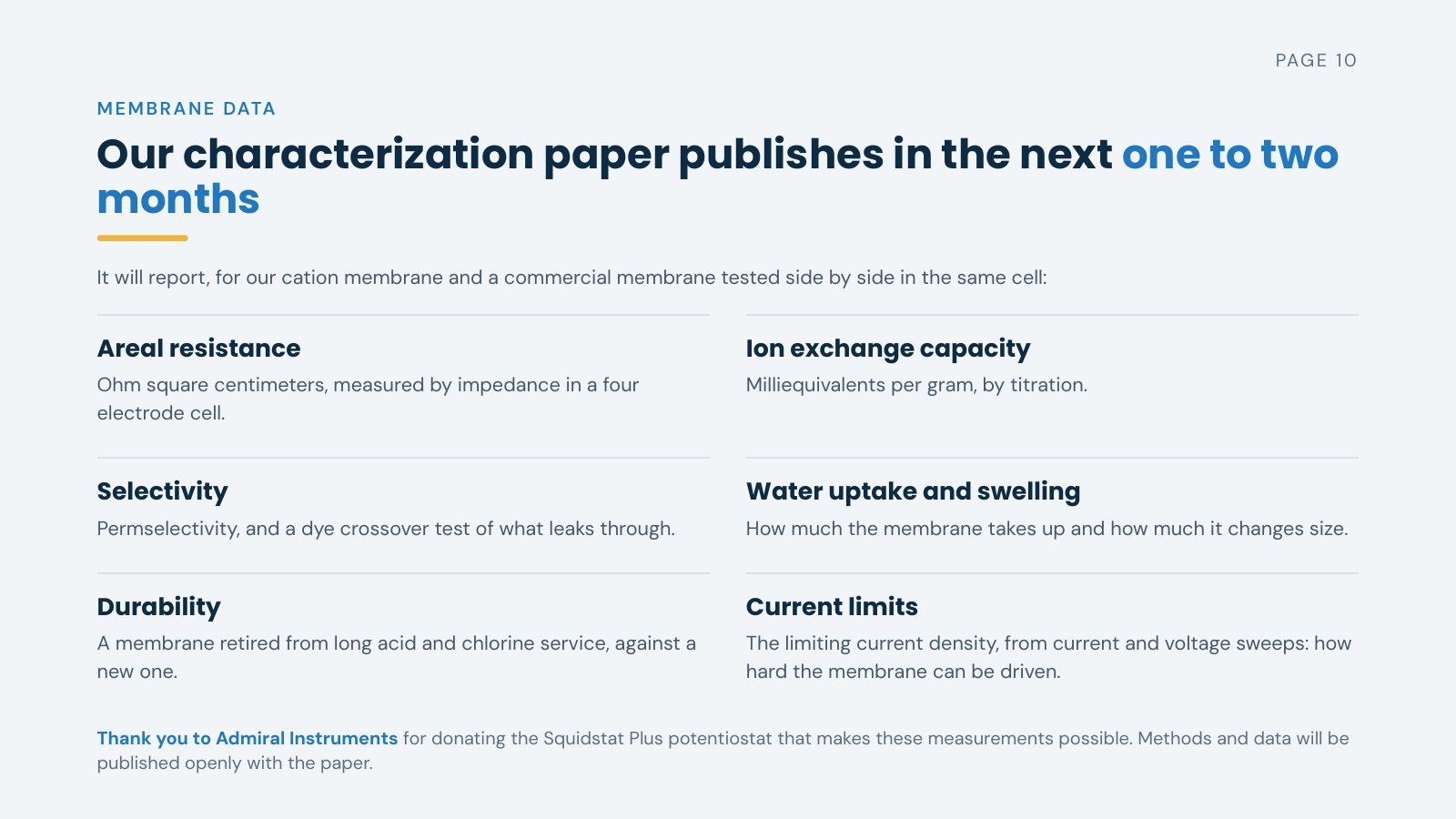
- Our membrane, why it is open source, and the characterization data now being measured
- Phosphate waste, the sulfur problem, and the energy and cost of regenerated acid
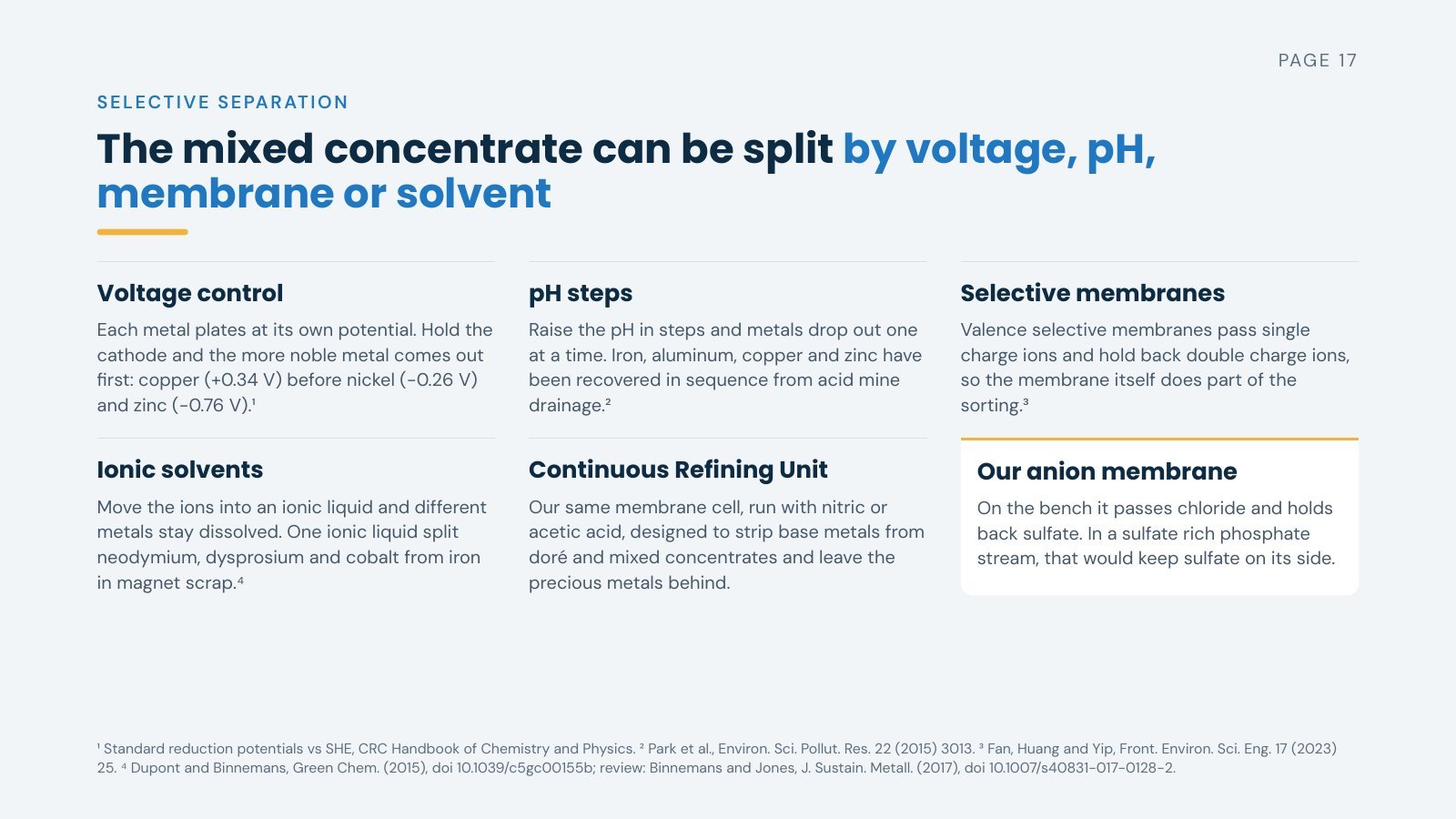
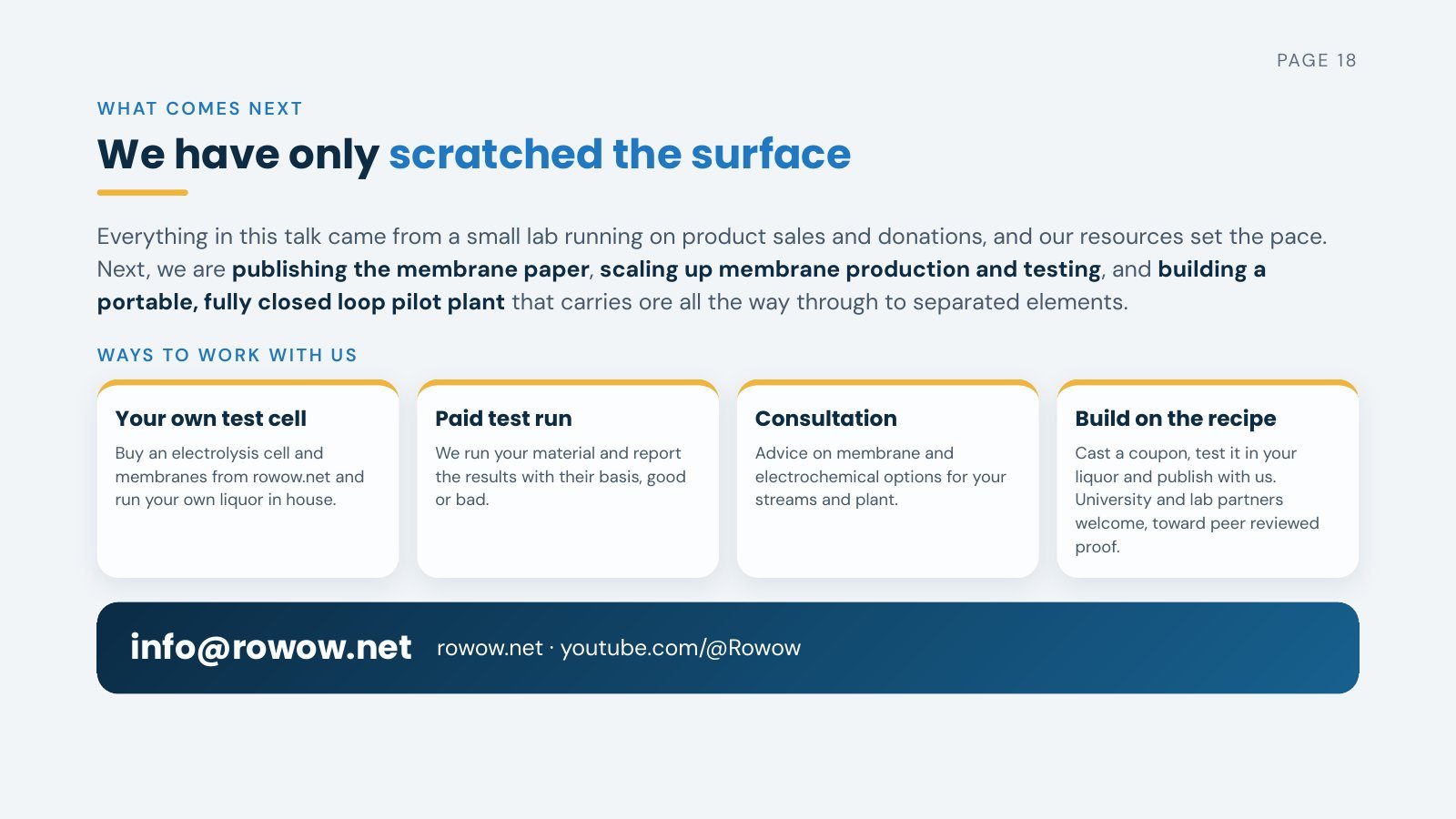
- The closed loop already running, options for selective separation of metals, and what comes next
How to read the numbers
- The energy and cost comparison on page 14 uses published figures, not our own runs.
- Totals on page 12 are our arithmetic from the sources listed on that slide, rounded, and are estimates.
- Every slide lists its sources at the bottom.
Follow up
The membrane recipe and build files are on GitHub. Test runs on your own material and on-site units are described on the Solutions page, and cells and membranes are in the shop. The recording of the talk is on YouTube, with more videos on our channel. Questions: info@rowow.net.