
Solutions
Run S.E.M Technology on your own material
Two ways to test the process on your feed: ship us a sample for a demonstration run in our lab, or put a research and demonstration unit on your site, installed by us, with your crew trained to run it.
Both start with a paid 30 minute introduction call. The rate is shown when you book.
Two ways to start
Test it at our lab, or run it at yours
The demonstration run answers one question: does the process recover what you care about from your feed. The on-site unit puts that capability on your property and leaves your crew able to run it. If you are not sure which fits, start with the run.
At our lab
Demonstration run
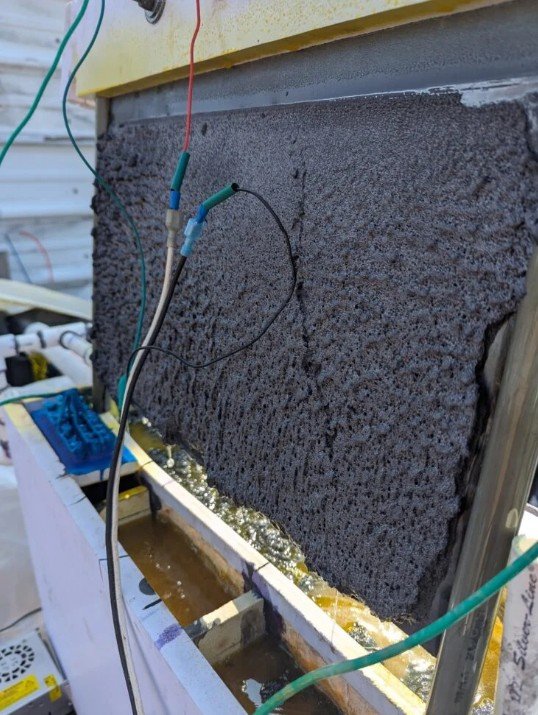
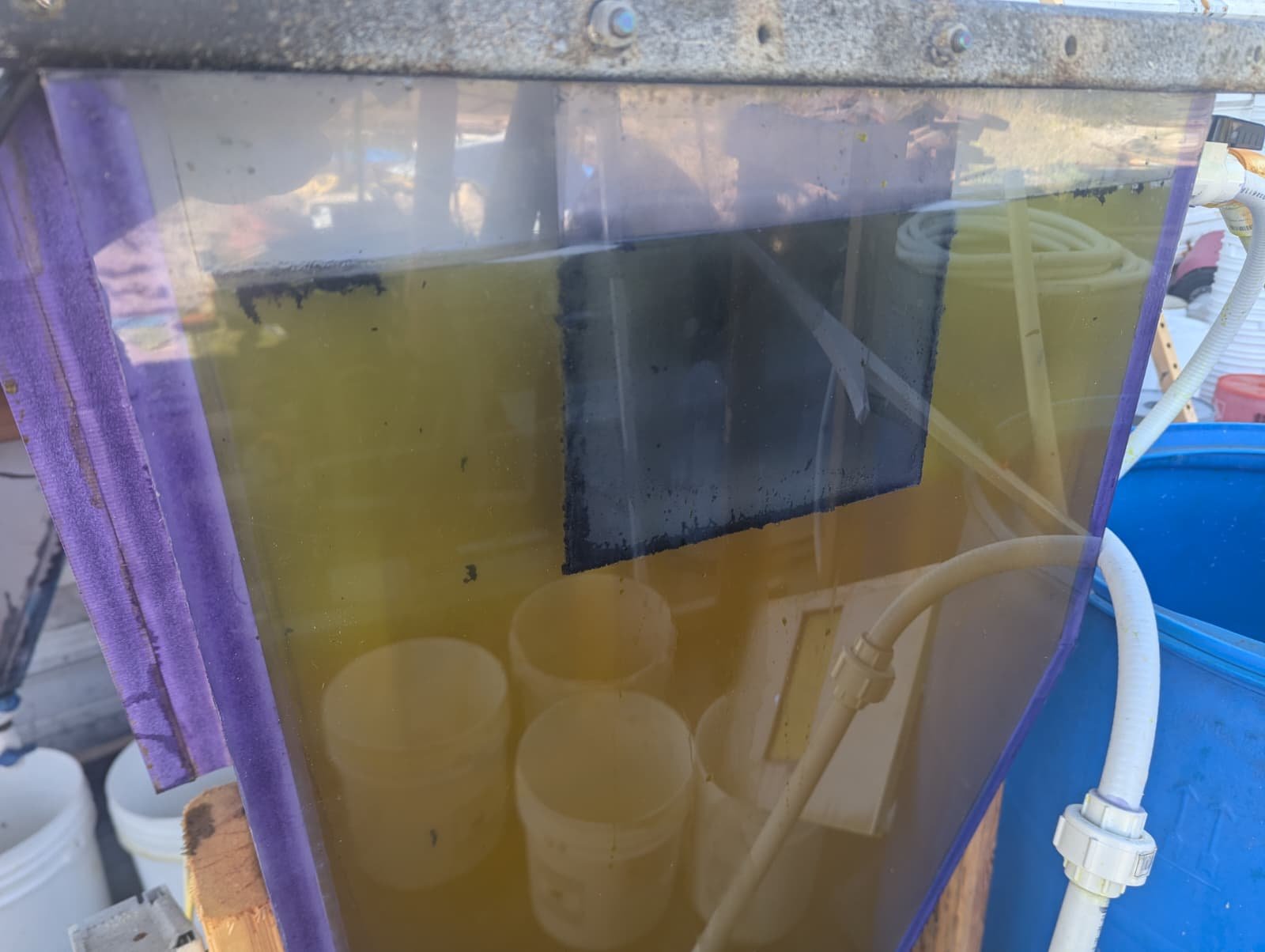
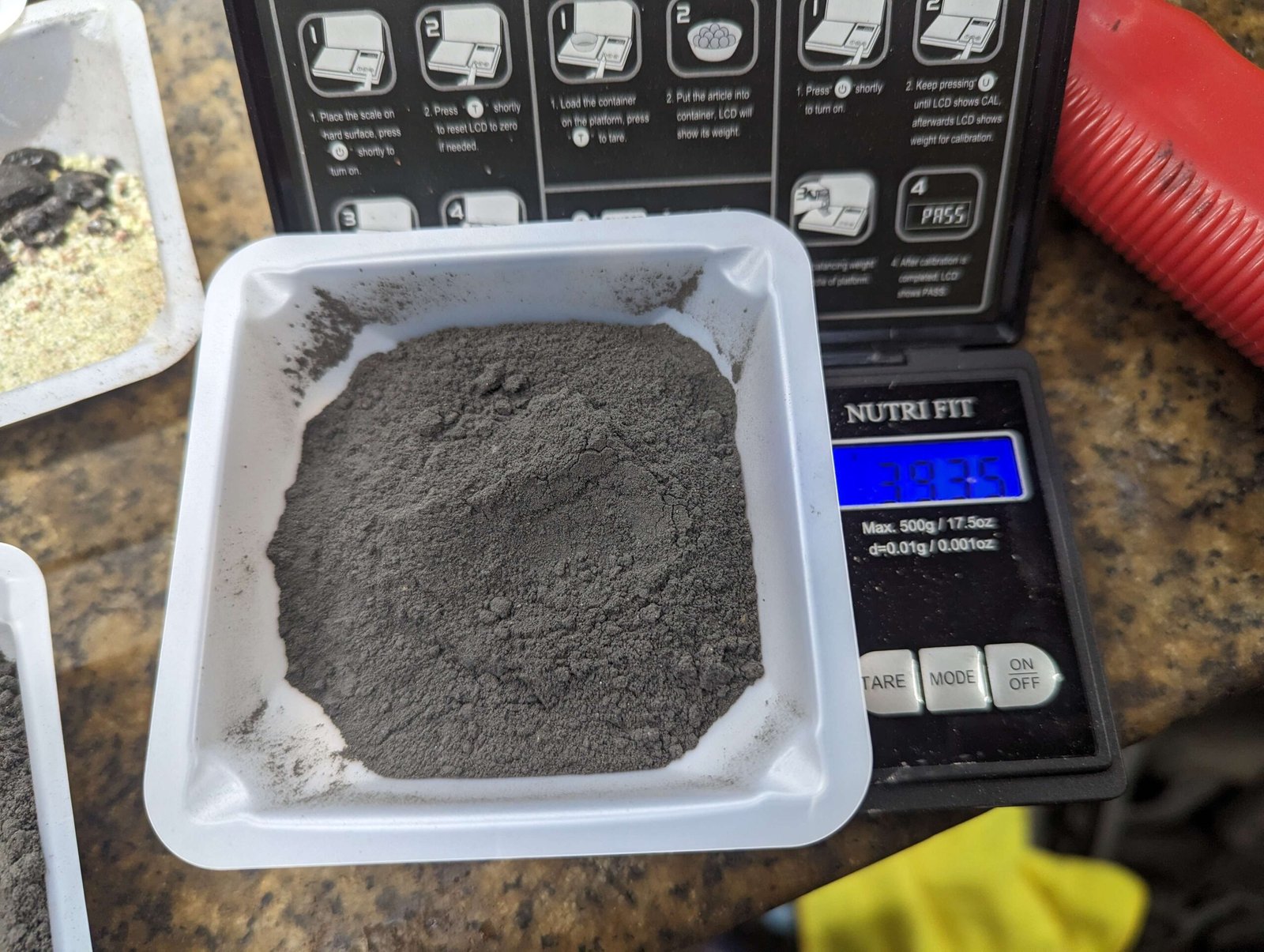
You ship 30 to 50 lb of crushed feed. We run it through the Continuous Mining Unit, plate out a metal concentrate, analyze four fractions by XRF, and send your materials back with photos, video and a written conclusion. About two weeks of lab time after the sample arrives.
$5,000 flat
Book an intro callHow a run works →At your site
Research and demonstration unit, installed
A fully assembled, factory-tested Continuous Mining Unit that runs 30 to 50 lb of feed per batch. We install and commission it on your site and train your crew to run it safely on their own, over 3 to 5 days.
$22,900 unit, plus installation
Book an intro callWhat the unit includes →Not ready for either? Start free with the open-source membrane and cell files on GitHub, order an XRF analysis from $50, or build a bench cell from the V1 cell kit ($900).
Demonstration run
See what the process pulls out of your feed
You do not need to build and run your own unit to find out whether S.E.M Technology works on your ore, tailings, electronic scrap or industrial residue. The Continuous Mining Unit in our Florida lab does the run for you, and you get the products back in hand.
It is a demonstration of the process, not an assay of your ore. We show what the process recovers; the in-house XRF numbers are indications, not certified grades.
What you get for $5,000
- Your feed run through the Continuous Mining Unit, at least half of the sample, until a usable concentrate is produced.
- Photographs and video of your run.
- In-house XRF (Rigaku NEX DE) on four fractions: the metal concentrate, the cathode-side liquid, the anode-side liquid and the leached feed.
- A 30 minute results call and a written conclusion.
- Your materials back: the concentrate, both liquid samples and, on request, a 100 g washed sample of the leached residue.
Intro call
30 minutes on your material and the terms. The rate is shown when you book.
Agreement and slot
Sign the service agreement and intake form, pay the run fee by wire or ACH, and reserve a slot. A mutual NDA is available.
Ship the sample
30 to 50 lb, crushed and pulverized, dry. Shipping both ways is yours.
Run and results
About two weeks of lab time after the sample arrives, longer when the queue is full.
What the run costs
| Introduction call (required first) | Rate shown when you book. 30 minutes on the terms and your sample, separate from the run fee. |
|---|---|
| Demonstration run | $5,000 flat, paid in full by wire or ACH to book. Covers processing, in-house XRF and everything listed above. It is a demonstration fee, not a per-ton processing rate. |
| Same-week rush | +$5,000, subject to availability. |
| Shipping both ways | Paid by you. |
| Independent ICP-MS | You arrange and pay the lab directly. |
| Leached residue | 100 g washed sample on request (you pay shipping). Bulk residue from $1,000, quoted after we process it, to neutralize and ship where lawful, or local pickup as-is. |
Multi-sample and academic discounts may be available. Ask on the call.
On-site unit
Put the unit on your site, with your crew trained to run it
For permitted labs and mine sites that want to run their own feed, batch after batch. The unit is a research and demonstration instrument, not a production plant, and its price is not a cost per ton of processing.
The unit
$22,900, assembled and factory tested
- Electrolysis cell
- Electrodes with ultrasonic dislodge
- Power supply
- Pumps with speed control
- ORP and pH monitoring
- Safety interlock
- Skid, frame and secondary containment liner
Runs 30 to 50 lb of feed per batch in a 55 gallon drum.
Installation and training
3 to 5 days on your site
- We install and commission the unit.
- We train your crew to run it safely on their own, with as much hands-on time as they want.
- Three remote support sessions after we leave.
$9,000 to $13,800, by the number of days. Travel and freight billed at cost.
Your site provides
Safety systems and permits
- Chlorine scrubber and exhaust
- Continuous chlorine gas detector
- PPE, eyewash and safety shower
- Permits for chlorine-evolving work
- Process chemicals bought locally: acid, salt and caustic
- Framing for the containment area
We send specific models and a site-readiness checklist.
Lead time is about 1 to 2 months from go-ahead to install. Payment is in full up front, because the rectifier, titanium and pumps for your build are bought before anything ships. Before we arrive you get the operating and safety manual and the readiness checklist, and we do not start the unit until the scrubber, exhaust and detector are working.
Read before you ship
The limits, and what we accept
Limits of the current system
It is a proof of concept on a bench-scale system, not a finished commercial assay or a complete mass balance.
It runs in batches today, without continuous feed. Not all of the sample dissolves, and not all metals plate out cleanly. Results are preliminary and indicative.
XRF cannot detect lithium, beryllium, boron or carbon, and it has matrix effects and peak overlaps. A full picture needs independent ICP-MS.
Some elements need a different chemistry than the single chloride leach. We tell you where your material likely falls before you ship.
What we accept
30 to 50 lb, crushed and pulverized to about 75 microns (200 mesh), dry.
Domestic samples preferred. International samples need a regulatory check first; ask us.
Out of spec samples (too coarse, wet or overweight): re-prep for a quoted fee, hold, return at your cost, or run as-is with poorer results if you accept that.
We cannot accept radioactive or NORM material (including most monazite and many rare earth ores unless tested and cleared), high-mercury material, explosives, biohazards, cyanide-bearing or cyanide-treated material, or unknown hazardous waste. You confirm this in writing.
By feedstock
How it applies to your material
All processing happens at our Florida lab, and we do not send material overseas. Recovery on your material is measured in a demonstration run, not assumed.
Gold and platinum group metals from ore
Gold, silver, platinum, palladium, rhodium, iridium and ruthenium from ore and concentrate, run through the mining mode. The leach of hydrochloric acid and sodium chlorate dissolves rhodium and iridium, and rhodium recovery was confirmed by third party ICP-MS assay.
How the mining mode works →Gold and PGMs from e-waste and catalytic converters
Gold and palladium from circuit boards, connectors and pins, and platinum, palladium and rhodium from spent catalytic converter material, run through the refining mode. Base metals plate out at the cathode; gold, silver and platinum group metals stay on the filter as a solid for downstream refining. Demonstrated on e-waste at bench scale.
How the refining mode works →Rare earths and critical minerals from tailings
Legacy piles and mining waste, run through the mining mode as a slurry. One leach solution covers 53 of the 60 US critical minerals, a coverage figure (detected by in-house XRF or predicted by the same chloride chemistry), not a recovery figure. Acidic or metal-bearing water from the same site runs through the treatment mode.
How the mining mode works →Questions people ask
Before you book
Anything not answered here, bring to the intro call or email info@rowow.net.
Can you guarantee how much you will recover?
No. The run is an experimental demonstration provided as-is. We show what the system does with your material; we do not promise a yield. Recovering little metal is a real result, not a failed run.
Is the demonstration run an assay?
No. It shows what the process recovers, with in-house XRF indications and the physical products in hand. For certified grades, send the products to a commercial assay lab or an independent ICP-MS lab of your choice.
Should I run a demonstration before buying the unit?
Usually, yes. The run shows whether the process fits your feed before you commit to a unit, site safety systems and permits. The intro call is where we decide which comes first.
Is the on-site unit a production plant?
No. It is a research and demonstration unit that runs 30 to 50 lb per batch. It proves the process on your feed and trains your crew. Production-scale units are scoped separately once the process is proven on your material.
What if you decide not to run my sample, or the run fails?
We can decline or cancel before completion, and then you get a full refund of the run fee and your unprocessed sample back at our cost. A failed run means something outside our control stopped your material from being processed, and that gets a 50% refund.
Do you keep my sample or results?
No. Your data on your sample is yours, and your run is confidential unless you give written permission to show an anonymized demonstration video.
What am I paying for, if the technology is open source?
Hands-on access to our lab, our operating time and our analysis on your material, or a built, tested unit with installation and training. The membrane and the core method stay open under CERN-OHL-S v2; you are not buying exclusive rights to anything.
Next step
Start with the introduction call
Bring the feedstock, the grade if you know it, and the tonnage. We will tell you whether a run or an on-site unit fits before you pay for either. We send the agreements and shipping instructions after the call.