
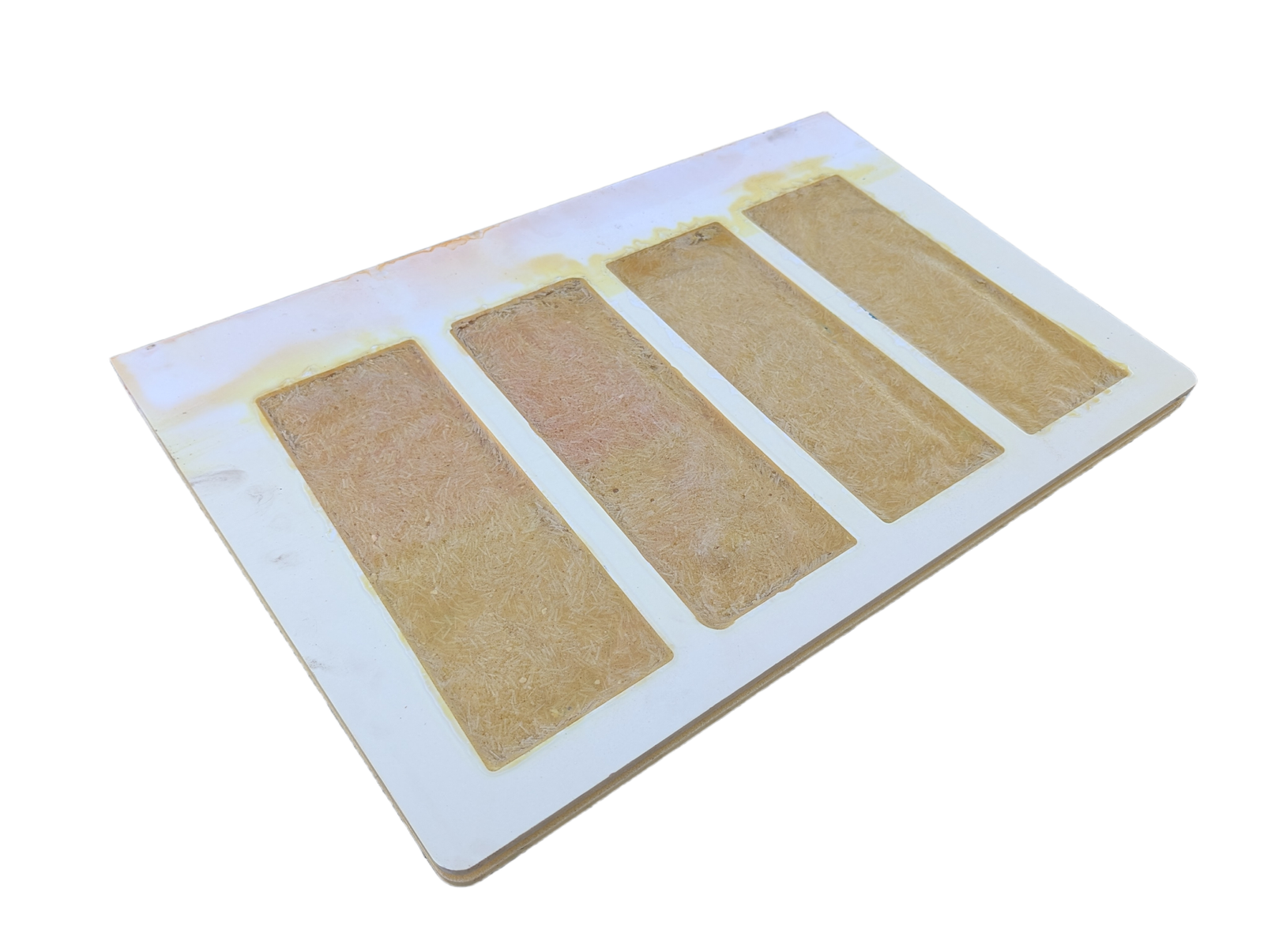
Cation exchange membrane already mounted in a slide-in frame, sized to drop straight into the V1 electrolysis cell. No cutting, no templating, no working out how to seal an edge.
RESEARCH / TESTING USE ONLY. NOT CERTIFIED OR APPROVED FOR CONSUMER OR REGULATED APPLICATIONS.
This listing is for one framed membrane assembly. The frame is 3/4 inch PVC foam board, 19.5 x 12.6 inches overall (495 x 320 x 19 mm), with four membrane windows of about 3.4 x 9 inches (86 x 230 mm) each, and it slides into the guide slots of the V1 series cell body. The V1 accepts up to two, so ordering a second gives you a two-membrane, three-chamber configuration.
Building a cell of your own design, or want raw stock to cut yourself? The 11 x 8.5 inch letter-size sheet is a separate listing at a lower price per sheet.
Material
The membrane itself is a PVC-based composite with fiberglass reinforcement. The fiberglass content makes it mostly rigid rather than flexible, and its thickness runs roughly 0.5 to 3 mm and varies between sheets. The membrane is cast directly into the frame windows, so it arrives already sealed in place and you do not handle the raw membrane at all.
Fitting
The frame slides into the membrane slot in the V1 cell body. Cutting, edge sealing and mounting are all done for you, which is the main difference between this and buying a raw sheet.
Sealing
The membrane is cast into its frame, and the V1 slot retains the frame by compression, so no adhesive or gasket work is needed on your side. If you are adapting the frame to a cell of your own design, PVC-compatible adhesives are the safe default; hot glue and silicone can work, but check them against your electrolyte first and keep heat away from the membrane.
Operating envelope (experimental)
Temperature below 60°C. pH and pressure are not rated. Current density of roughly 50 to 200 mA/cm² depending on solution conductivity, cell geometry, and how you have built the cell. Treat these as starting points rather than specifications, and determine safe limits for your own chemistry.
Before first run
Expect to condition the membrane. Soak it in your working solution, then run current through it. A brief period above normal operating voltage can help it polarize, after which you bring the voltage back down or switch to a fixed current supply. This is at your discretion and responsibility.
Shipping and storage (IMPORTANT)
Ships hydrated in a sealed wet bag. Leave it sealed until you are ready to install it. You can pat it dry with a paper towel to handle and seat it, but DO NOT ALLOW THE MEMBRANE TO FULLY DRY. Drying out shrinks and cracks it permanently. Store it sealed and hydrated. Do not freeze.
Research disclaimer and liability notice
Provided as-is for research, development, educational, or industrial evaluation only. It is not certified, accredited, or approved for potable water, food contact, medical, life-safety, consumer, or regulatory-compliance applications. The Buyer is solely responsible for determining compatibility, for safe operation within their own limits for chemical exposure, temperature, pH, and pressure, and for lawful use and disposal. No guarantee is made regarding performance, results, durability, or fitness for any particular purpose.